Wins Parking Supplies
Barriers, delineators and barricades
Use delineator posts to mark a lane or keep cars off an island, barricades to close an area to traffic for a while, and barriers to physically separate traffic from people or work. Flexible delineators bolt down and spring back when hit; barricades are set out and picked up; water-filled barriers are light empty and heavy full. We sell all three to businesses by the lot.
For businesses. Minimum order: one lot, or the listed minimum on each product. Ships to the lower 48 states.
Barriers and delineators
Barriers, Delineators and Barricades in the store
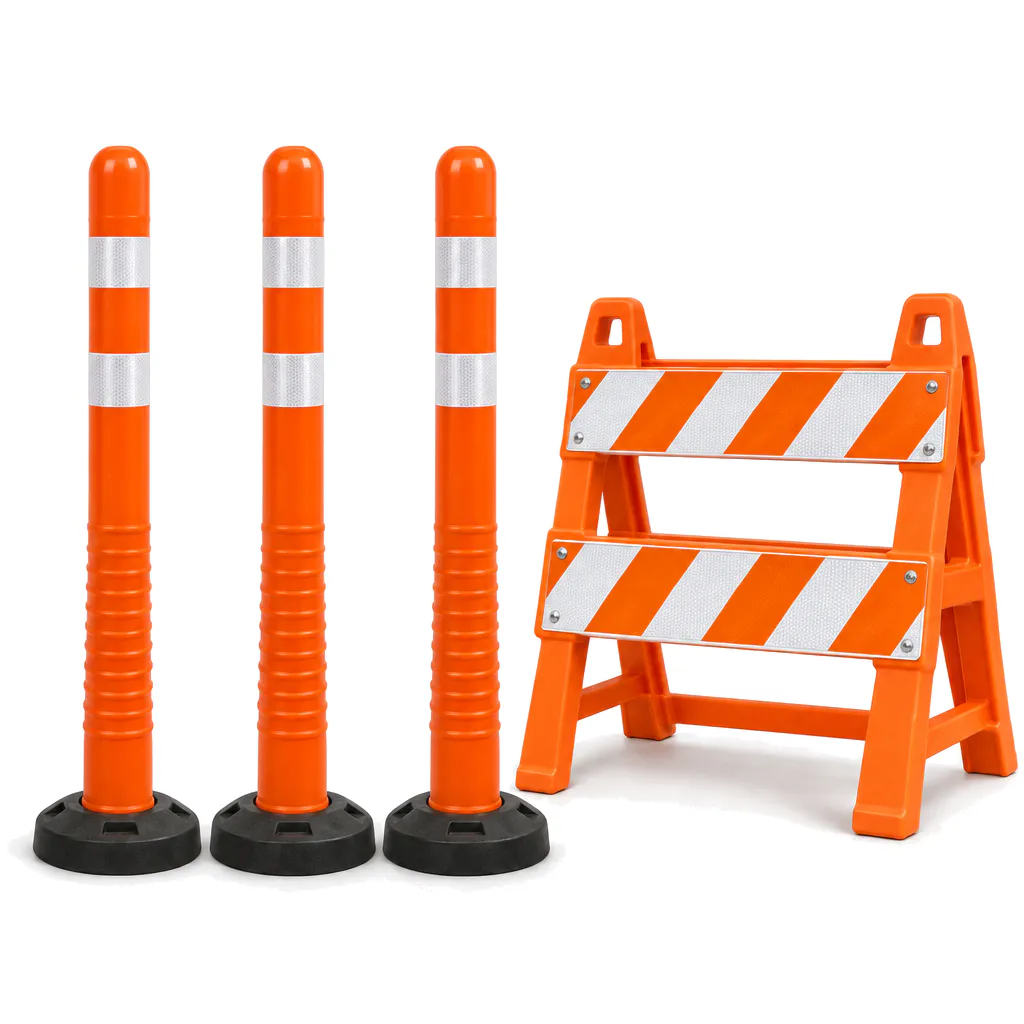
42 in Orange Delineator Posts with Rubber Bases, Reflective Bands, Lot of 25 – New
Pack of 25 · Freight
$25.20 / delineator post
Type 1 Plastic Traffic Barricades, Orange and White Reflective, Lot of 10 – New
Pack of 10 · Freight
$82.80 / barricade
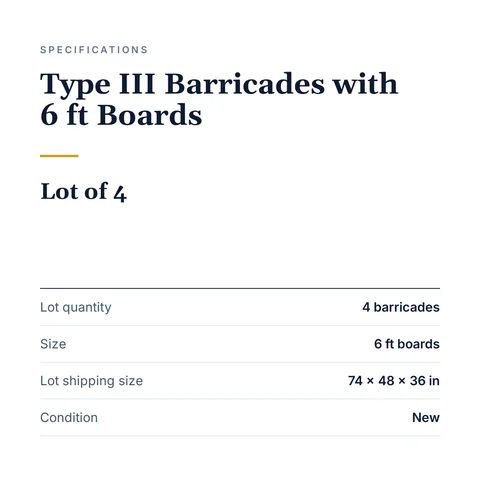
Type III Barricades with 6 ft Reflective Boards, Plastic, Lot of 4 – New
Pack of 4 · Freight
$193.50 / barricade
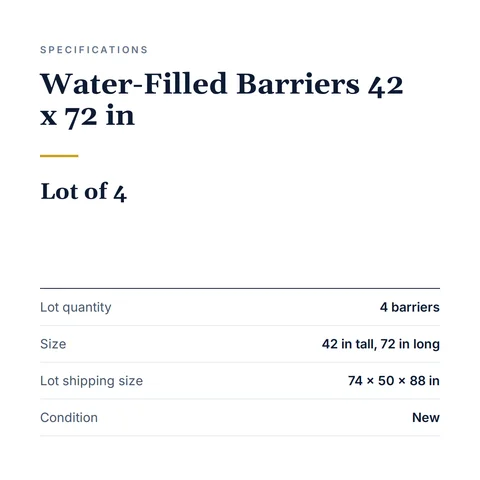
Water-Filled Plastic Barriers 42 x 72 in, Lot of 4 – New
Pack of 4 · Freight
$474 / barrier
Buyer's guide
Buying barriers and delineators: what an operator checks
How many posts, barricades or barriers you need
Delineators and barricades are counted by length and spacing. MUTCD guidance for channelizing devices on roads is a spacing in feet no greater than 1 times the speed limit in mph along a taper and 2 times along the straight run, so at 10 mph a post every 10 to 20 feet. In a lot where you are separating a lane permanently, many owners space posts closer, 5 to 10 feet, so drivers can't cut through.
Barriers are counted by the run: divide the length by the section length and round up. A 100-foot run of 6-foot water-filled sections takes 17.
Types and sizes
Flexible delineator posts are commonly 28 to 48 inches tall with reflective bands. Barricades come in the MUTCD types: Type I has one rail, Type II two, and Type III three and is used to close a road. Water-filled plastic barriers interlock and are filled on site; precast concrete barriers are much heavier and set by crane or forklift.
Each product page lists height, length, empty and filled weight where it applies, and the reflective sheeting.
Installation and hardware
Delineators mount to a base that is glued with epoxy or bituminous adhesive, or bolted with anchors; bolted bases hold better where plows run. Water-filled barriers are placed empty, connected, and filled with water, or a brine mix where it freezes. Barricades need ballast, like sandbags on the feet, never on the rails.
Asphalt versus concrete
Delineator bases bond well to clean, dry concrete. On asphalt, adhesive works on sound pavement, but bolted bases with asphalt anchors last longer. Barriers and barricades sit on either surface; on a slope, check that water-filled sections stay connected once full.
Pallet counts and freight basics
Delineator posts and barricades are long and light, so pallets are bulky for their weight. Empty water-filled barriers are light but large. The product page shows pallet quantity and shipping class for each.
LTL (less-than-truckload) carriers price a pallet by its weight, its size and its freight class. Freight class runs from 50 to 500 and is set mostly by density, in pounds per cubic foot: dense, heavy pallets ship at a lower class than light, bulky ones. Your delivery address matters too. A liftgate, a residential or limited-access address, or a call-ahead appointment each add a carrier charge. Our store quotes it live at checkout from the carriers, with those options priced in.
Common mistakes
What we see most:
- Gluing delineator bases to dusty or wet pavement.
- Treating a water-filled barrier as crash-rated when it isn't rated for that use.
- Sandbagging the barricade rails instead of the feet.
- Leaving barricades out at night without reflective sheeting or lights.
- Closing a fire lane without the fire department's approval.
When they're required
On public roads, devices follow the MUTCD and any permit conditions. In a private lot, they're how you separate a pedestrian route, close a section for work or an event, or protect a crew. Your contract, insurer or the city's permit may require specific devices.
Sources
Written by the Wins Parking operations team from the lots we run. Codes change and vary by city and state, so confirm local code before you install.
Freight and pallets
LTL (less-than-truckload) carriers price a pallet by its weight, its size and its freight class. Freight class runs from 50 to 500 and is set mostly by density, in pounds per cubic foot: dense, heavy pallets ship at a lower class than light, bulky ones. Your delivery address matters too. A liftgate, a residential or limited-access address, or a call-ahead appointment each add a carrier charge. Our store quotes it live at checkout from the carriers, with those options priced in.
From an operator
Free layout review
Send us the site address, stall count and a photo or plan. A Wins operator looks at the layout and sends back a supplies list and any striping or signage questions to raise with your local code office. No cost, no obligation.
Q&A
Questions buyers ask
What is a delineator post?
A flexible post, often 28 to 48 inches tall with reflective bands, mounted to a base to mark a lane or keep cars off an island. It bends when hit and springs back.
How far apart should delineator posts be?
On roads, MUTCD guidance is no more than 1 times the speed limit in feet along a taper and 2 times along the straight run. In lots, many owners space them 5 to 10 feet apart to stop cut-throughs.
What is the difference between Type I, II and III barricades?
The number of rails: Type I has one, Type II two and Type III three. Type III barricades are used to close a road or area.
How do you keep delineator posts from coming loose?
Bond them to clean, dry pavement, or bolt the base down with anchors. Bolted bases last longer where snowplows run.
Can I buy barricades in bulk?
Yes. Type 1 plastic barricades are sold in lots of 10, and 42-inch delineator posts in lots of 25, with freight quoted live at checkout.
Are water-filled barriers crash rated?
Only if the specific product is tested and rated for it. The product page shows any rating the manufacturer documents; if none is listed, treat it as a separation barrier.
Add QR pay signs with Park Graph
Park Graph, operated by Wins Parking, LLC, lets owners collect parking payments by QR sign, with no app for drivers and no meter or kiosk on site. Pair it with the signs and posts you order here.
Related
Often ordered with


Ready to Unlock Your Parking Revenue?
Request a proposal. Tell us about your property and we'll show you what's possible.
Prefer to talk? Call or text 877-713-WINS (877) 713-9467 or (970) 279-1744