Wins Parking Supplies
Wheel stops and parking blocks
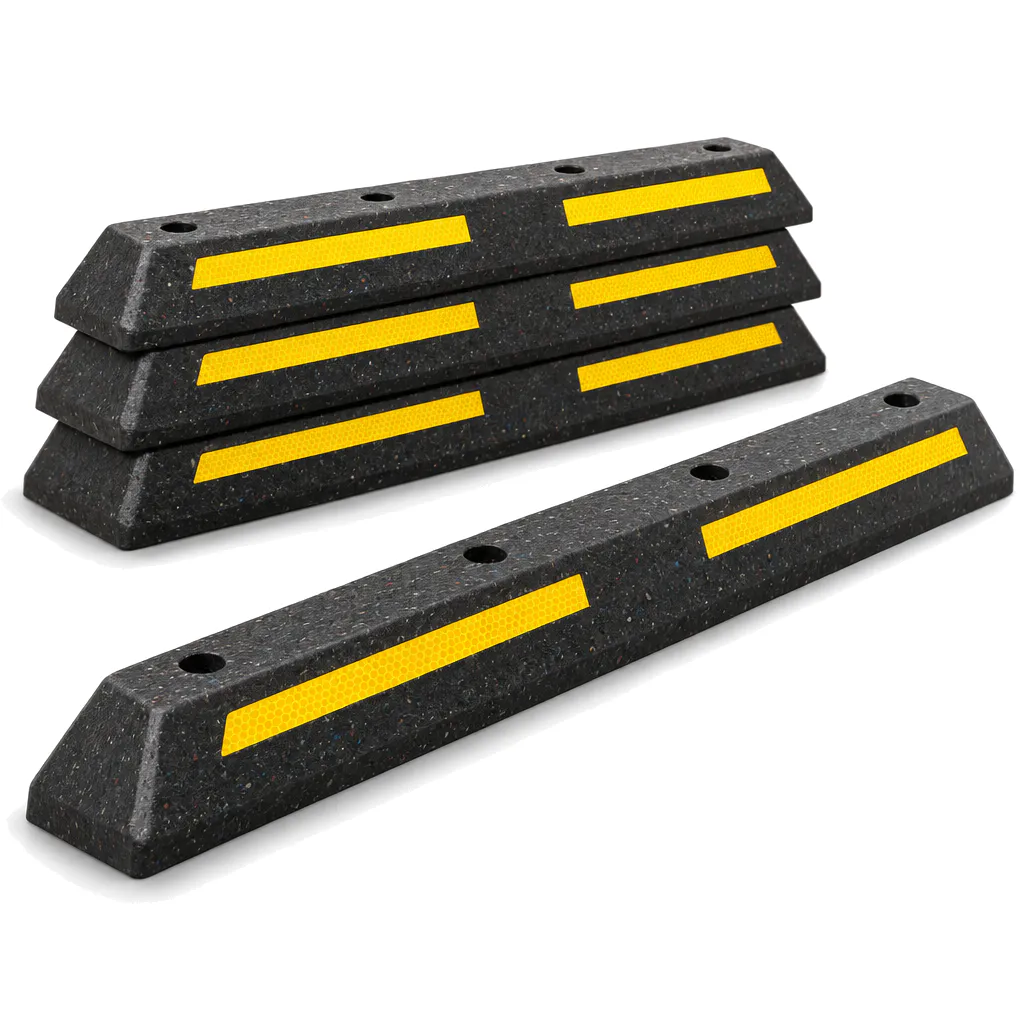
One wheel stop per head-in stall is the rule of thumb, and the 6-foot stop is the common size for a standard 9-foot stall. Rubber stops are lighter than concrete, don't chip, and two people can set them; concrete stops are heavy and need equipment. Each stop is pinned to asphalt with rebar spikes or anchored to concrete. We sell wheel stops and their hardware to businesses by the lot.
For businesses. Minimum order: one lot, or the listed minimum on each product. Ships to the lower 48 states.
Wheel stops
Wheel Stops and Parking Blocks in the store
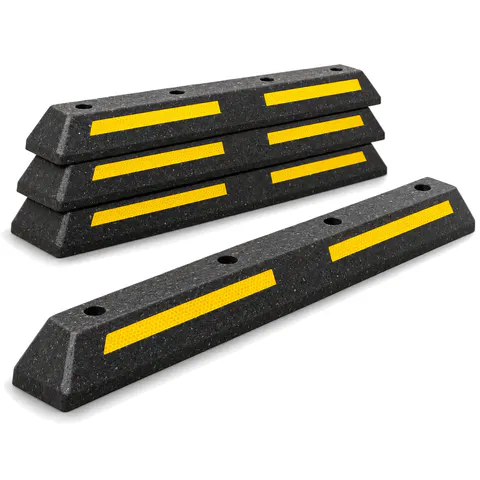
6 ft Rubber Parking Wheel Stops with Yellow Reflective Stripes, Bulk Lot of 20 – New
Pack of 20 · Freight
$52.80 / wheel stop
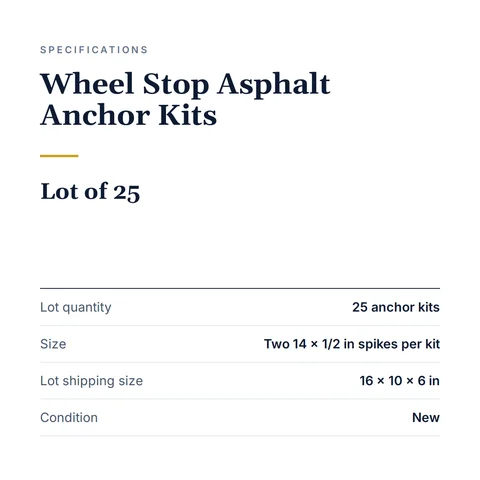
Wheel Stop Asphalt Anchor Kits, Two 14 x 1/2 in Spikes per Kit, Lot of 25 – New
Pack of 25 · Freight
$6.55 / anchor kit
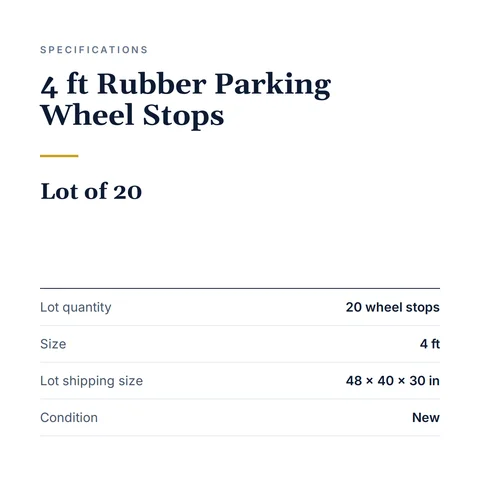
4 ft Rubber Parking Wheel Stops, Bulk Lot of 20 – New
Pack of 20 · Freight
$42 / wheel stop
Calculator
Work out how many you need
Wheel stops for a lot
60 wheel stops
One wheel stop per head-in stall. Pull-through stalls and stalls facing open pavement usually don't need one.
Planning a whole lot? Use the lot kit builder.
Buyer's guide
Buying wheel stops: what an operator checks
How many wheel stops per stall
Count one stop per head-in stall where a bumper could reach a curb, wall, walkway, landscaping or a building. Pull-through stalls usually don't get them. Accessible stalls do: the advisory note to 2010 ADA Standards 502.7 names wheel stops as a way to keep parked cars from overhanging and narrowing an adjacent accessible route.
Then count hardware. Each stop takes the number of pins or anchors its holes call for, usually two or three, and the product page lists it.
Sizes and placement
6-foot stops fit standard 8.5- to 9-foot stalls and leave room to walk between them. Shorter 4-foot stops suit compact stalls and motorcycle areas.
Set the stop so the front bumper stops before the curb or walkway behind it. Many lots set it roughly 2 to 3 feet in from the head of the stall; adjust for the vehicles you serve. Keep stops in a straight line along a row; one out of line gets hit.
Installation and hardware
On asphalt, drive rebar pins through the holes into the pavement and base; pins should be long enough to reach well into the base below the asphalt. On concrete, drill and set epoxy-anchored rebar or wedge anchors. Rubber stops sit flat and can be moved and re-pinned; concrete stops are heavy enough that many crews set them with a skid steer.
Paint the curb face or choose stops with molded reflective strips so drivers see them at night and in snow.
Asphalt versus concrete
Asphalt takes driven pins and is the easy case. On concrete, you drill for each anchor, so budget the time. On new asphalt, wait for it to cure before driving pins, and avoid setting stops over cracks, where pins loosen.
Pallet counts and freight basics for wheel stops
Wheel stops are dense and heavy. A pallet of rubber stops is a compact, heavy load in a low freight class; concrete stops are heavier still. The product page shows weight per stop, pallet quantity and shipping class, and the cart totals pallets and weight as you add.
LTL (less-than-truckload) carriers price a pallet by its weight, its size and its freight class. Freight class runs from 50 to 500 and is set mostly by density, in pounds per cubic foot: dense, heavy pallets ship at a lower class than light, bulky ones. Your delivery address matters too. A liftgate, a residential or limited-access address, or a call-ahead appointment each add a carrier charge. Our store quotes it live at checkout from the carriers, with those options priced in.
Common wheel stop mistakes
The misses we see:
- Placing stops in a walkway or across an accessible route, where they become a trip hazard.
- Pins too short for the pavement, so stops creep within a season.
- Setting stops too close to the curb, so bumpers still hit it.
- Dark stops on dark asphalt with no paint or reflective strip.
- Forgetting to order the pins with the stops.
When wheel stops are required
The 2010 ADA Standards don't require wheel stops, but section 502.7 requires that parked vehicles can't block the required clear width of an adjacent accessible route, and its advisory note names wheel stops as one way to do it. Many local codes and landlords require them where stalls face a sidewalk or building. Confirm local code.
Sources
Written by the Wins Parking operations team from the lots we run. Codes change and vary by city and state, so confirm local code before you install.
Freight and pallets
LTL (less-than-truckload) carriers price a pallet by its weight, its size and its freight class. Freight class runs from 50 to 500 and is set mostly by density, in pounds per cubic foot: dense, heavy pallets ship at a lower class than light, bulky ones. Your delivery address matters too. A liftgate, a residential or limited-access address, or a call-ahead appointment each add a carrier charge. Our store quotes it live at checkout from the carriers, with those options priced in.
ADA references on this page come from the 2010 ADA Standards for Accessible Design. State and local codes can add to them, so confirm local code with your building department before you buy or install.
From an operator
Free layout review
Send us the site address, stall count and a photo or plan. A Wins operator looks at the layout and sends back a supplies list and any striping or signage questions to raise with your local code office. No cost, no obligation.
Q&A
Questions buyers ask
How many wheel stops do I need?
One per head-in stall where a bumper could reach a curb, walkway, wall or landscaping. Use the calculator on this page with your stall count.
How far from the curb should a wheel stop be?
Far enough that the front bumper stops before the curb or walkway. Many lots set stops roughly 2 to 3 feet in from the head of the stall; adjust for your vehicles.
Rubber or concrete wheel stops?
Rubber stops are lighter, don't chip and two people can set them; concrete stops are heavier and need equipment to place. Both are pinned or anchored.
How do you anchor wheel stops to asphalt?
Drive rebar pins through the stop's holes into the asphalt and base below. On concrete, drill and use epoxy-set rebar or wedge anchors.
Do ADA spaces need wheel stops?
They aren't required, but 2010 ADA Standards 502.7 requires that parked cars can't block an adjacent accessible route, and wheel stops are a common way to do it. Confirm local code.
Can I buy wheel stops by the pallet?
Yes. 6-foot rubber wheel stops are sold in lots of 20 and ship by freight, quoted live at checkout.
What size wheel stop fits a standard stall?
The 6-foot stop is the common size for a standard 9-foot stall. Shorter stops suit compact and motorcycle stalls.
Add QR pay signs with Park Graph
Park Graph, operated by Wins Parking, LLC, lets owners collect parking payments by QR sign, with no app for drivers and no meter or kiosk on site. Pair it with the signs and posts you order here.
Related
Often ordered with
Ready to Unlock Your Parking Revenue?
Request a proposal. Tell us about your property and we'll show you what's possible.
Prefer to talk? Call or text 877-713-WINS (877) 713-9467 or (970) 279-1744