Wins Parking Supplies
Speed bumps and speed humps for parking lots
Speed bumps are short and steep and slow cars to a crawl, which suits parking aisles and drive-throughs; speed humps are longer and gentler and suit private roads where traffic should move at 15 to 20 mph. Most rubber bumps come in 6-foot segments bolted end to end, so a bump across a 24-foot two-way aisle takes four. We sell bumps, humps, end caps and anchors to businesses by the lot.
For businesses. Minimum order: one lot, or the listed minimum on each product. Ships to the lower 48 states.
Speed bumps and humps
Speed Bumps and Speed Humps in the store
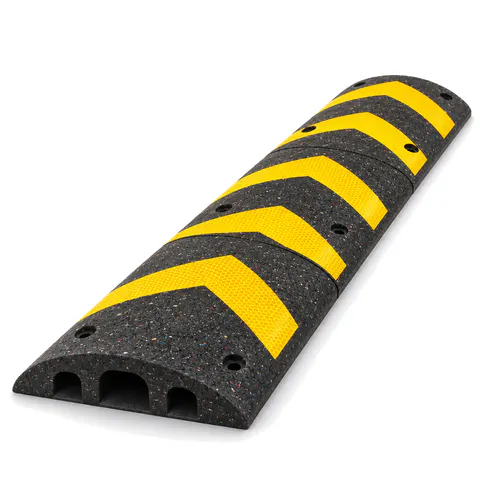
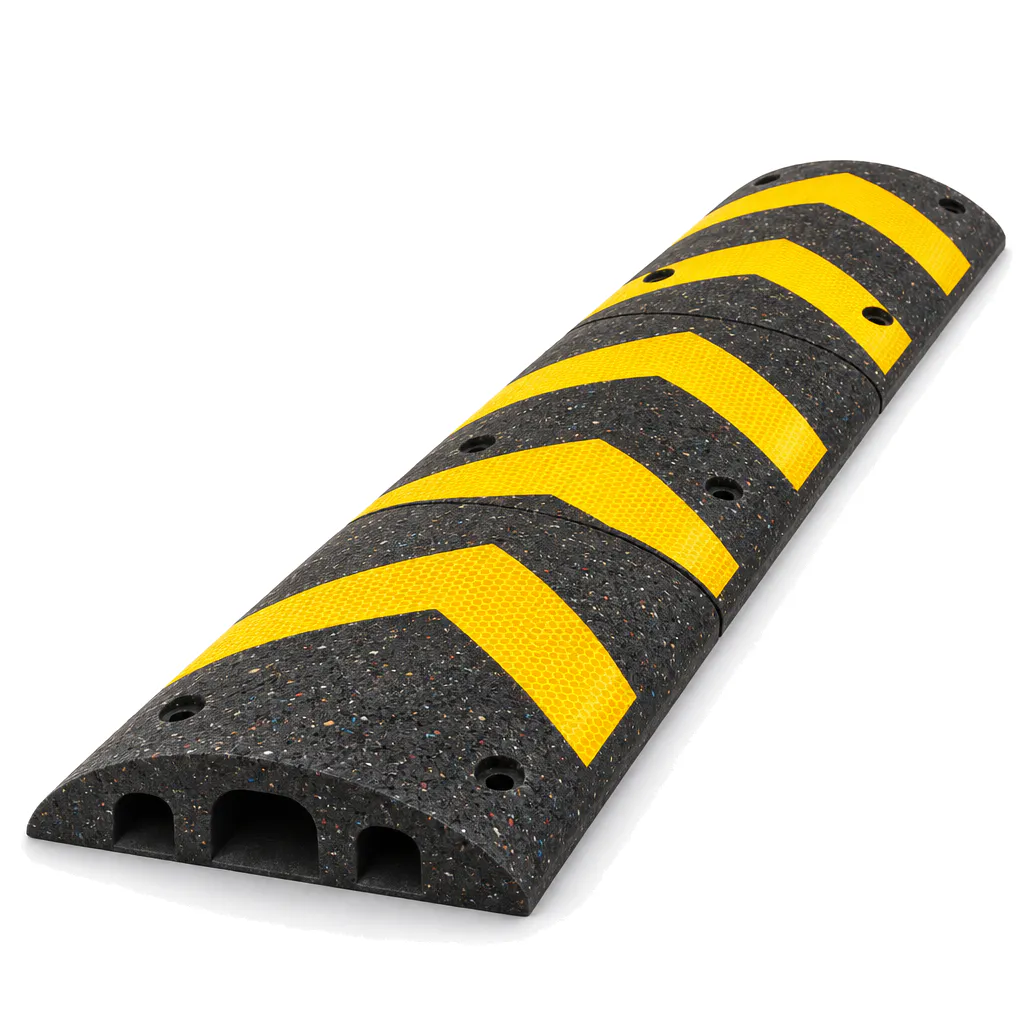
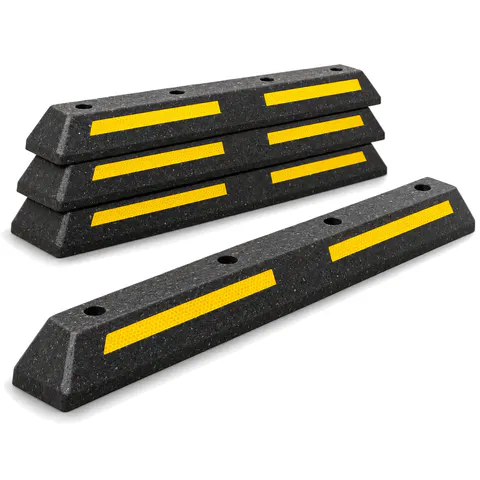
6 ft Rubber Speed Bumps with Yellow Reflective Stripes and Cable Channels, Lot of 10 – New
Pack of 10 · Freight
$64.80 / speed bump
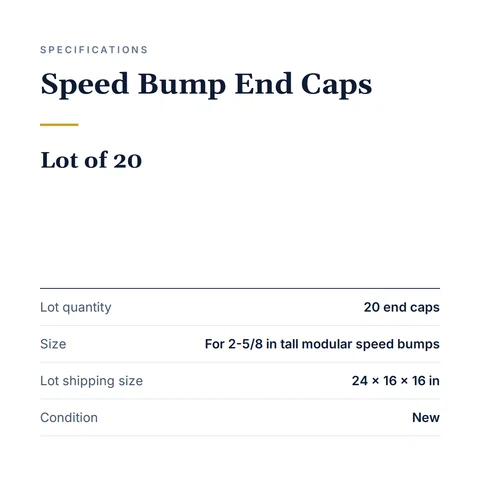
Speed Bump End Caps for 2-5/8 in Modular Speed Bumps, Lot of 20 – New
Pack of 20 · Freight
$9.55 / end cap
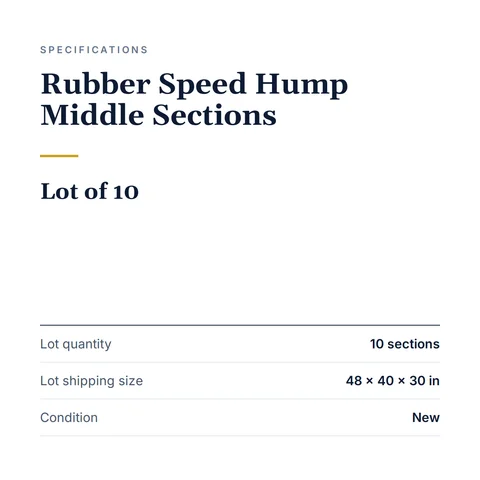
Rubber Speed Hump Middle Sections, Lot of 10 – New
Pack of 10 · Freight
$94 / section
Calculator
Work out how many you need
Speed bumps per aisle
2 bumps
8 six-foot segments (4 per bump) and 4 end caps
Bumps spaced along the aisle (FHWA traffic calming guidance commonly uses 200 to 600 feet), each made of 6-foot segments across the width plus two end caps.
Planning a whole lot? Use the lot kit builder.
Buyer's guide
Buying speed bumps and humps: what an operator checks
How many speed bumps per drive aisle
Two numbers decide it: how many bumps along the aisle, and how many segments across it. Along the aisle, place one where speed builds: at the start of a long straight run, before a crosswalk or a building entry, and spaced so drivers don't speed back up between them. Closer spacing keeps speeds lower.
Across the aisle, divide the aisle width by the segment length and round up. A 24-foot two-way aisle takes four 6-foot segments; leave a gap at the curb for drainage if the bump would dam water. Add end caps where the system uses them.
Bump or hump: sizes and speeds
Speed bumps are usually 2 to 4 inches tall and 1 to 3 feet long in the direction of travel, and they slow vehicles to about walking speed. They belong in parking aisles, not on streets. Speed humps are about 3 to 4 inches tall and 12 to 14 feet long, and cars cross them at 15 to 20 mph; FHWA's traffic calming guidance covers them for local streets.
Mark every bump with paint or the molded reflective strips so drivers see it, and post a sign where traffic enters.
Installation and hardware
Modular rubber and plastic bumps are bolted down through pre-drilled holes. In asphalt, long lag spikes or spikes with washers are typical; in concrete, use wedge or sleeve anchors. Drill straight, keep segments tight end to end, and re-check anchors after the first weeks of traffic and every spring after snowplowing.
Plows catch bumps. In snow country, many owners pull removable bumps for the winter or mark them for the plow driver.
Asphalt versus concrete
Asphalt takes lag spikes but softens in summer heat, so check hold-down after hot weather. Concrete holds anchors well but needs a hammer drill and the right anchor length. Don't install over cracked or crumbling pavement: repair it first, or the anchors pull out.
Pallet counts and freight basics for speed bumps
Rubber bumps are dense and heavy, so a pallet of them ships at a low freight class but adds up in weight fast. Each product page lists weight per segment, pack size, pallet quantity and shipping class.
LTL (less-than-truckload) carriers price a pallet by its weight, its size and its freight class. Freight class runs from 50 to 500 and is set mostly by density, in pounds per cubic foot: dense, heavy pallets ship at a lower class than light, bulky ones. Your delivery address matters too. A liftgate, a residential or limited-access address, or a call-ahead appointment each add a carrier charge. Our store quotes it live at checkout from the carriers, with those options priced in.
Common speed bump mistakes
What we see go wrong:
- Putting a steep bump on a road where traffic should move at 20 mph.
- Blocking drainage across the full aisle width.
- Placing a bump in a crosswalk or across an accessible route.
- Short anchors in asphalt that loosen within a season.
- No sign or contrasting color, so drivers hit it at speed.
When speed bumps are allowed or required
No federal rule requires speed bumps in a private lot. They are an owner's choice, but fire departments and cities may limit them on fire apparatus access roads and on public streets, where a city traffic engineer decides. Check before installing on any road a fire truck uses.
Sources
Written by the Wins Parking operations team from the lots we run. Codes change and vary by city and state, so confirm local code before you install.
Freight and pallets
LTL (less-than-truckload) carriers price a pallet by its weight, its size and its freight class. Freight class runs from 50 to 500 and is set mostly by density, in pounds per cubic foot: dense, heavy pallets ship at a lower class than light, bulky ones. Your delivery address matters too. A liftgate, a residential or limited-access address, or a call-ahead appointment each add a carrier charge. Our store quotes it live at checkout from the carriers, with those options priced in.
From an operator
Free layout review
Send us the site address, stall count and a photo or plan. A Wins operator looks at the layout and sends back a supplies list and any striping or signage questions to raise with your local code office. No cost, no obligation.
Q&A
Questions buyers ask
What is the difference between a speed bump and a speed hump?
A speed bump is short and steep and slows cars to walking speed; it belongs in parking aisles. A speed hump is about 12 to 14 feet long and is crossed at 15 to 20 mph on private and local roads.
How many speed bump segments do I need for a two-way aisle?
Divide the aisle width by the segment length and round up. A 24-foot aisle takes four 6-foot segments, plus end caps if the system uses them.
How far apart should speed bumps be in a parking lot?
Place them where speed builds and before crosswalks and entries. Closer spacing keeps speeds lower; farther apart lets drivers speed back up between them.
How do you install rubber speed bumps on asphalt?
Bolt each segment down through its holes with lag spikes sized for asphalt, keep segments tight end to end, and re-check anchors after hot weather.
Can a snowplow damage speed bumps?
Yes. In snow country, owners often remove modular bumps for winter or mark them clearly for the plow driver.
Do you sell speed bumps in bulk?
Yes. 6-foot rubber speed bumps are sold in lots of 10, with freight quoted live at checkout.
Add QR pay signs with Park Graph
Park Graph, operated by Wins Parking, LLC, lets owners collect parking payments by QR sign, with no app for drivers and no meter or kiosk on site. Pair it with the signs and posts you order here.
Related
Often ordered with
Ready to Unlock Your Parking Revenue?
Request a proposal. Tell us about your property and we'll show you what's possible.
Prefer to talk? Call or text 877-713-WINS (877) 713-9467 or (970) 279-1744